Inventory is your business’s largest asset—without products to sell, you wouldn’t make any money. But the logistical process of managing and recording inventory throughout its life cycle is a complex task.
The problem is exacerbated by the fact that you don’t always have a computer on hand. Perhaps you’re talking to a customer on the stock floor and want to check whether you have a particular shoe size in stock. Maybe you’re away from a physical store and need to confirm whether you have enough inventory to meet upcoming demand for your pre-planned Black Friday sale.
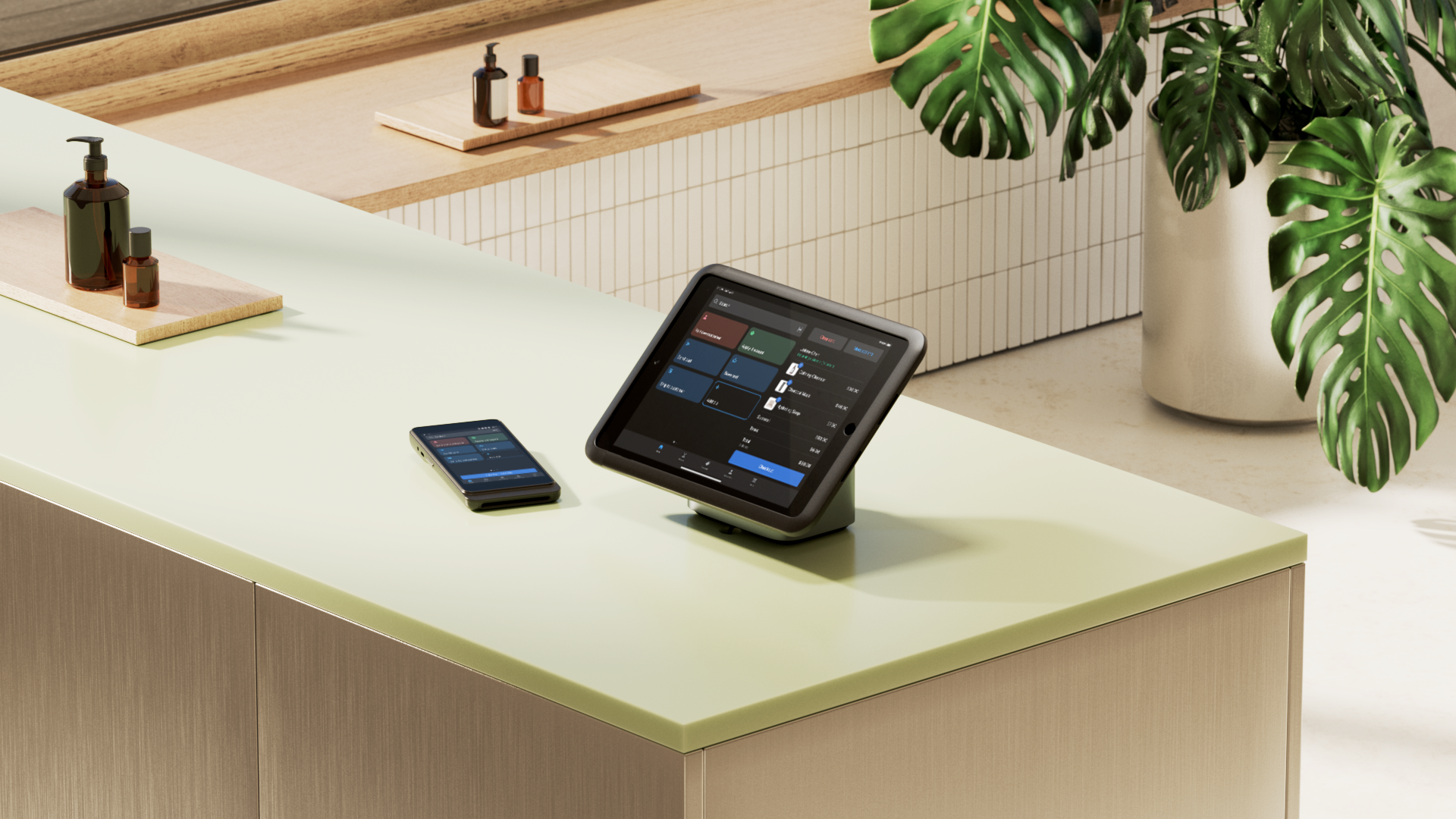
In either case, a mobile inventory management system (IMS) makes your data accessible from anywhere, so long as you have a smartphone or mobile point-of-sale (POS) system. This guide shares how to use them with top picks for retailers.
Table of contents
What makes an inventory system “mobile”?
An inventory management system is considered “mobile” if it’s portable and accessible on the go, usually through a smartphone or handheld POS terminal. This mobility enables you to update inventory quantities, scan product barcodes, retrieve product data, and locate particular products from anywhere with an internet connection.
Components of mobile inventory systems
Real-time data sync
Inventory management presents a classic distributed systems challenge: maintaining data consistency across multiple concurrent transactions. In the time between starting and concluding a manual count, you might've sold two units in-store and another five online, creating a race condition where your recorded quantities become inaccurate.
Inventory is notoriously difficult to monitor because it’s constantly fluctuating. In the time between starting and concluding a manual count, you might’ve sold two units in-store and another five online. Your recorded quantities are now inaccurate, rendering the entire count pointless.
A mobile inventory system should offer real-time data synchronization from the following sources:
- Warehouse
- Order processing and fulfillment
- Inventory
Shopify does this with its unified commerce model. Whether it’s a warehouse management system or inventory quantities from multiple retail stores, every piece of inventory data feeds back to a central business “brain.” This gives you a single point of reference for everything happening in your business—proven to reduce total cost of ownership (TCO) by up to 22% compared to other systems.
Cloud-based architecture
Cloud-based architecture is the infrastructure that an inventory management system uses to be “mobile.” Instead of storing data locally on a smartphone or on-premise server, data is uploaded to the cloud to make it accessible from anywhere.
The Shopify POS app, for example, is available for iOS and Android devices. Inventory data you’re storing or referencing isn’t actually stored on your device. It’s uploaded to the cloud and synced in real time, so you (and your customers) can view real-time quantities in nearby stores whenever the data is altered.
User permission management
Your inventory management system often holds a wealth of sensitive information that must be protected, such as supplier details, inventory costs, and pricing. Unauthorized access can cause a breach, so opt for a mobile system that allows you to control who can access and edit your inventory data. Trainees, for example, might have a “Manager’s approval required” permission in their Shopify POS profile to prevent any mistakes from impacting inventory accuracy.
User permissions also help with auditing. You can reference the mobile IMS to track exactly who updated the quantity or received the inventory when querying any discrepancies.
Reporting and analytics
Inventory is the biggest asset on your company’s balance sheet. Reporting and analytics helps make smarter restocking decisions and accurately forecast future demand—both of which help reduce carrying costs.
Shopify unifies your inventory data across all sales channels to give a 360-view of how your inventory behaves. It offers prebuilt inventory reports for easy monitoring, such as:
- Best- and worst sellers
- Inventory on hand (including its valuation)
- Turnover rate by SKU
- Inventory location
- ABC analysis
Types of mobile inventory management systems
Cloud-native
A cloud-based IMS stores your data in the cloud, as opposed to an on-site server. They synchronize data—such as inventory quantities, purchase orders, and sales data—in real-time, and make this data available from any internet-connected device.
Cloud-native systems also integrate with other cloud-based systems, such as your ecommerce platform or enterprise resource planning (ERP) system. And because they’re hosted across multiple servers, there’s less risk. If one server fails, your data is still accessible, because it’s routed to another cloud server.
Hybrid systems
A hybrid mobile IMS combines both cloud-based and on-site servers. This offers greater flexibility, but has a significant disadvantage: any inventory data stored on your on-site server is difficult to access remotely.
ERP integrations
An ERP inventory management system brings multiple business functions together under one roof. It’s useful for comparing inventory data across information from multiple systems.
For example, your ERP inventory system might show that a bestselling product will be out of stock in four weeks. The integration with your vendor management system shows the supplier’s lead time is two weeks, so you place an order today with two weeks to spare before the stockout occurs.
Mobile apps
Some ecommerce platforms, POS vendors, and standalone inventory management vendors offer mobile apps. These give you the same functionality you’d have on a desktop through your smartphone for on-the-go inventory tracking.
Top mobile inventory apps
1. Shopify app
The Shopify app collates all of your business’ most important data into a single “brain.” It unifies inventory, order, and customer data into a single dashboard that’s accessible from the mobile app.
The Shopify app is available for both iOS and Android devices. You can use this app to manage your store's inventory by scanning product barcodes, adjusting inventory quantities, and tracking inventory levels directly from your mobile device.
Key features include:
- Inventory scanner: Use the inventory scanner to scan barcodes, accept receiving inventory, and track inventory levels.
- Adjust inventory quantities: Adjust the available inventory quantity by tapping the quantity number and editing it.
- Track inventory: Activate inventory tracking for products and variants to keep track of stock levels.
2. Stocky for Shopify POS
Stocky is an inventory management system designed for Shopify retailers. Thanks to Shopify’s core data model, any inventory data from Stocky feeds back to your Shopify admin. This makes your inventory data accessible through the Shopify POS mobile app.
Key features include:
- Automated reorders: Draft purchase orders for vendors when inventory levels fall below a predetermined threshold.
- Real-time inventory tracking: View prebuilt inventory report to make smarter restocking decisions.
- Barcode scanning: Speed up inventory counts through Stocky’s compatibility with Shopify POS hardware, including barcode scanners.
3. Zoho Inventory
Zoho Inventory is an inventory management system that’s part of the Zoho Commerce suite of products. You can use it to track the movement of stock across different sales channels.
Key features include:
- Transfer stock: Track how products move throughout owned warehouses, retail stores, or 3PL partners from the mobile app.
- Integrations: Pull inventory data from various sources, including Shopify, Etsy, eBay, Amazon, and Zoho Commerce.
- Rich product data: Track inventory based on batch and serial numbers.
4. QuickBooks Commerce
Predominantly known for its accounting software, QuickBooks also offers a feature to track inventory on the go. It works by importing inventory data from your ecommerce platform so you can track quantities and generate financial reports that require inventory valuations.
Key features include:
- Real-time reporting: Monitor your inventory’s valuation in real-time with automatic adjustments.
- Purchase orders: Get inventory alerts when stock falls below your threshold, and have QuickBooks create a purchase order for the relevant supplier.
- Accounting: Reconcile invoices and receipts against your bank statements for easy financial reporting.
5. NetSuite
NetSuite is a retail ERP system that lets retailers connect inventory data with other business processes, such as supply chain and accounting. It’s more complex than other mobile IMSs yet offers an on-the-go solution to viewing inventory reports from the ERP.
Key features include:
- Smart count: A way to automate inventory counts without freezing transactions.
- Real-time visibility: Connect your warehouses, retail stores, dropshipping partners, and 3PLs to get real-time inventory visibility from the NetSuite app.
- Native demand-based replenishment: Combine your business’s data with market trends and seasonality to estimate demand for a particular product, and configure reorder points to prevent stockouts.
💡Pro tip: Shopify’s global ERP program can connect your store with NetSuite, so you can let data flow freely between your two systems.
Manage inventory easier with Shopify
A mobile inventory management system gives you the flexibility to reference, update, and track inventory data where you are—even if you’re not physically on the shop floor.
Shopify is unique in the sense that it unifies your order, customer, and inventory data across every sales channel. Retailers like Mizzen+Main have already benefited from this first-hand. With the help of Shopify’s core operating system that acts as a central business “brain,” the apparel retailer experienced a 27% growth in retail revenue and 15% growth in retail orders.
“Shopify allows you to create a very large omnichannel business at a relatively low cost, and its ease of use really minimizes the burden on your team,” says Mizzen+Main VP of ecommerce Natalie Shaddick.
Mobile inventory management FAQ
What is mobile inventory management?
Mobile inventory management is a way for retailers to track, update, and optimize inventory on the go. Shopify, for example, has a mobile app that unifies your inventory data from multiple sales channels, so you can look up inventory details from your smartphone anywhere, any time.
What are the 4 types of inventory management system?
The four types of inventory management systems are: (1) Cloud-native inventory systems, (2) Hybrid systems, (3) ERP integrations, and (4) Mobile inventory management apps.
What is the best app for keeping inventory?
Shopify and Stocky are the two best apps for keeping inventory. Both let you retrieve product details, track inventory levels, and generate inventory reports from your smartphone through the Shopify app.
How do you manage inventory remotely?
Cloud-based mobile inventory management software lets you manage inventory remotely. For example, Shopify unifies your inventory data in real-time from wherever you sell. The Shopify mobile app allows you to access this data from your smartphone.