

 Shopify blog

Successful retailers know that tracking and analyzing foot traffic reveals critical insights about customer behavior. When you understand visitor patterns, you can create intuitive shopping environments, deliver exceptional customer experiences, and significantly increase sales.
The market shows positive momentum, with retail foot traffic growing 2.8% year-over-year in December 2025, driving overall sales up 3.8%.
But here’s the challenge many retailers face today: A customer browses your products online, adds items to their cart, but doesn’t complete the purchase. Three days later, they walk into your physical store to see products in person.
Without unified commerce analytics that connect online browsing with in-store foot traffic, this valuable customer journey remains invisible—and a sales opportunity might be missed.
This is why modern retailers are moving beyond basic foot traffic counting to implement comprehensive analytics that connect online and offline customer behavior. Ahead, you’ll learn how to collect and leverage foot traffic data to create a unified commerce experience that drives revenue for your business.
What is retail foot traffic?
Retail foot traffic, or footfall data, measures how many people enter a physical store during a specific time frame. Store owners use visitor movement data to understand when customers visit, where they go inside the store, and how visits relate to actual sales.
The main reason for collecting foot traffic data information is to count visitors at key locations within the store. These important spots (called “points of interest,” or POI) include store entrances, product displays, department counters, and temporary sales areas.
Tracking foot traffic data offers businesses a range of valuable customer and business insights, including:
- The number of people who visit over a defined time period
- The busiest days and times for business
- The average duration of each visitor’s stay
- How many people walk past the store rather than enter it
- The most frequently visited parts of the store
- The effectiveness of marketing and sales campaigns
How to collect foot traffic data: 7 methods
Reliable data collection can be achieved through a combination of manual or automated methods that range in price, including:
1. Mobile devices
When people visit stores with their phones, they might share location data if they use the store’s app and allow location sharing. This happens through GPS mobile location data or small devices called beacons.
Pros:
- Provides detailed customer journey mapping within stores
- Offers real-time data collection without additional hardware
- Enables personalized marketing based on location
- Can integrate with other retail systems for comprehensive analytics
Cons:
- Many shoppers opt out of location tracking, creating sampling bias
- Privacy concerns may affect customer perception
- Requires complementary methods to ensure complete customer data collection
2. People counting sensors
People-counting sensors measure visitor traffic at specific locations using light beams or thermal detection. Retailers place these sensors at strategic points like entrances or promotional areas to track foot traffic patterns.
Solutions like Dor People Counter use thermal sensing to monitor foot traffic and integrate seamlessly with Shopify POS. Unlike competitors’ systems that require complex middleware to connect with your commerce platform, Dor’s integration with Shopify provides a unified data view that lets you compare foot traffic alongside sales, inventory, and customer data—all within one platform.
Pros:
- High accuracy at specific choke points
- Relatively low maintenance requirements
- Privacy-friendly as sensors don’t collect personal data
- Easy installation and battery-powered options available
Cons:
- Limited to counting at fixed locations only
- Cannot track movement throughout the entire store
- Requires multiple sensors for comprehensive coverage
- Sensors may have difficulty distinguishing between individuals in groups
3. Wi-Fi traffic
Use Wi-Fi networks to collect foot traffic data when shoppers connect their devices. Foot traffic data providers like Aislelabs use Wi-Fi systems to generate heat maps, count visitors, and deliver targeted marketing campaigns in-store. Wi-Fi tracking can even identify new versus returning customers based on their device’s internet connection.
Some providers offer free plans for single store locations. These are good options for tracking basic visitor numbers if you aren’t ready to pay for advanced features.
Pros:
- Creates detailed heat maps of store activity
- Distinguishes between new and returning visitors
- Requires minimal additional infrastructure if Wi-Fi already exists
Cons:
- Only captures data from visitors who connect to the network
- Signal interference can affect accuracy
- May require technical expertise to implement and maintain the system
4. Video analytics platforms
Video analytics platforms use security cameras (CCTV) to collect and analyze visitor information in stores. Retailers install special cameras that connect to analysis software. These systems can spot patterns in how people move around, which areas get busiest, and where suspicious activity is occurring.
Pros:
- Provides comprehensive visual data to understand customer behavior
- Offers dual functionality with security systems
- Can detect anomalies and security concerns simultaneously
Cons:
- Higher initial investment and ongoing costs
- Requires significant processing power and storage
- More complex implementation than other solutions
- May raise privacy concerns among shoppers
5. Manual counting
Staff use hand-held clickers to count visitors. This is an easy, low-cost way to track traffic without buying expensive tech. Log daily totals in a spreadsheet to track retail foot traffic trends over time and see which days or hours are your busiest.
Pros:
- No technology investment required
- Can be implemented immediately
- Easy to train staff to use
- Flexible deployment during specific time periods
Cons:
- Labor-intensive and pulls staff from other duties
- Prone to human error and inconsistency
- Difficult to maintain during busy periods
- Limited data insights compared to automated systems
6. POS data
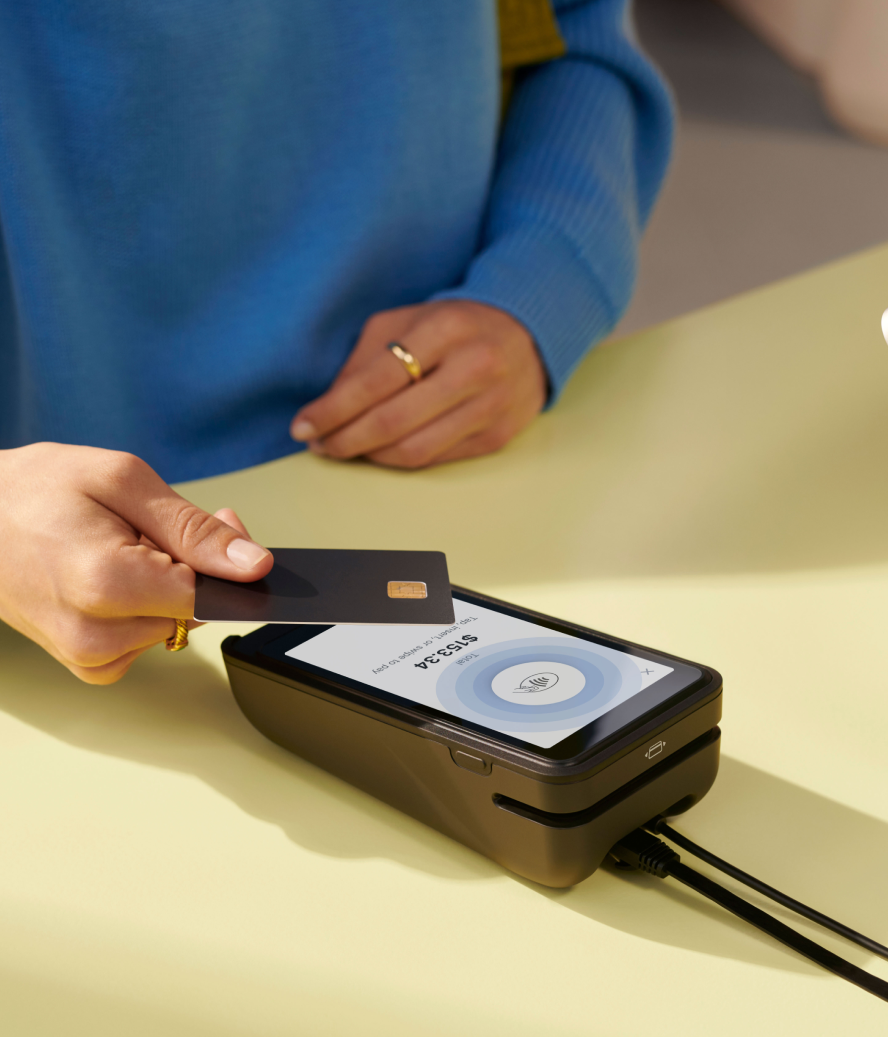
Shopify POS helps store owners manage every aspect of their omnichannel retail business in a single commerce operating system. This system includes the card reader and barcode scanner you use to ring up sales, plus retail software that counts how many people visit your store.
The biggest advantage to using Shopify POS data is that you can see how many browsers become buyers by comparing the number of visitors to actual sales recorded in the system.
Pros:
- Shows the direct link between store visits and actual purchases
- Tells you exactly how many visitors end up buying something
- Helps you see which products sell best at different store locations
- Makes it easier to schedule staff during your busiest times
- Works with other Shopify tools to give you a complete view of your business
Cons:
- Only tracks people who buy something, not those who just browse
- Needs to be connected with other counting methods to see all visitors
- Staff need training to use the POS system correctly—though many retailers report a significantly lower investment with Shopify
7. Google Maps
Google uses location data from its users to display popular times and average visit durations on your store’s Google Business Profile. While it doesn’t give exact visitor counts, it can show you historical trends by the hour for free, helping smaller retailers plan their staffing strategically.
Pros:
- No cost and no hardware needed
- Helps you see which business hours are busy and which are slow
- Perfect for testing traffic patterns before buying a paid tracking system
Cons:
- You only see relative busyness, not the specific number of people in the store
- It only tracks people who have Google Location Services turned on
- You cannot export the data or see more specific customer behaviors, like heat mapping
How to choose the right foot traffic data collection method
A retail foot traffic tracking system is an investment. Use these criteria to find the right solution for your store.
Accuracy
Data collection method accuracy can vary widely between a $50 DIY sensor and a $1,000 AI-powered camera. Even a 10% error rate can lead to overstaffing or missed sales targets.
Ask a provider how their system handles cases like:
- Groups and families. Does a family of four count as one shopping unit or four separate people?
- Strollers and carts. Can the system tell the difference between a person pushing a stroller or a shopping cart?
- Staff exclusion. Can the system filter out your employees on the floor so they don’t inflate your numbers?
For Wi-Fi counters, understand how the provider handles media access code (MAC) randomization. This privacy feature in many smartphones makes Wi-Fi-based tracking less accurate, as it makes it harder to distinguish between new and returning visitors.
Coverage and business fit
The right retail technology depends on what you are trying to solve. A door counter tells you how many people entered, but it won’t tell you if they spent 20 minutes in the shoe department or walked straight to the register.
Decide whether to track volume, behavior, or both. Use:
- Infrared or basic counters for simple in and out totals
- Video or thermal systems to see the shopper journey or identify dead zones in your store layout
Companies like Traf-Sys offer a range of hardware so you can match the tech to your store’s physical specs, like ceiling height and entrance width.
Data outputs and metrics
Raw foot traffic data isn’t useful unless you can understand it. Before choosing a solution, be sure the provider offers dashboards that display your retail metrics.
Look for peak hour trends, in-store dwell times, and conversion rate—data points that can connect to your POS system. If you know 100 people walked into your store in a day, but only five bought something, you likely have a conversion problem, not a traffic problem.
Integrations
Make sure you can export your traffic data and connect it with your sales, marketing, and ecommerce reports. Look for tools that allow easy data downloads or direct application programming interface (API) connections to other platforms. Storetraffic, for example, includes API access and data exports to help retailers sync data across platforms.
If you’re using Shopify POS, you can get a direct integration with apps like Dor. Simply peel and stick a thermal sensor over your door and start counting traffic that syncs right to your Shopify admin.
Total cost of ownership
People-counting systems vary in price, depending on the tech you use and the scale of your business. The sticker price of a sensor is only part of the cost; you’ll also need to factor in installation, monthly software fees, and maintenance.
For example, Storetraffic advertises monthly plans for between $25 and $35 per device. But the devices themselves can range anywhere from $499.95 to $1,650. Dor offers a one-time $300 hardware fee, plus a $150 monthly plans.
The right price depends on whether you want a low monthly cost with a high upfront investment or a higher subscription fee that covers everything. Calculate the total cost of ownership over two or three years to see which model fits your budget.
What can foot traffic data tell you?
Retail foot traffic data reveals how customers move through your store, when they shop, and what influences their buying decisions.
The right tracking system can help uncover a ton of useful insights, like:
- Peak days and hours. See exactly when your store is busiest throughout the day, week, and year. This lets you schedule staff rotas efficiently, plan restocking, and prepare for rush periods.
- Customer movement patterns. Use foot traffic data to learn how shoppers navigate your store. Do they turn left when entering? Which aisles do they visit most? Which sections do they skip? This information helps you arrange your store’s layout and place products where customers are most likely to see them.
- Dwell time. Discover which areas of your sales floor hold customers’ attention longest. Areas with high dwell time but low sales might need better signage or product arrangements to convert interest into purchases.
- Conversion rates. Compare visitor counts to actual sales to understand what percentage of browsers become buyers. Low conversion in high-traffic areas signals potential issues with pricing, product selection, or customer service.
- Outside influences. Identify how external factors affect your traffic. Do more people visit when it’s raining? Does a nearby event boost your numbers? Understanding these patterns helps you prepare for predictable traffic fluctuations.
- Customer demographic data. Learn who shops at your store by analyzing when different customer segments visit. For example, parents with young children might shop during different hours than college students or business professionals.
- Competitor benchmarks. Discover how you compare to others in your business area. Providers like Placer.ai can compare your store’s foot traffic to your competitors’’ based on visit trends.
Bridging the online-offline divide with unified commerce
While traditional retailers still treat ecommerce and in-store traffic as separate data silos, forward-thinking brands are embracing unified commerce to gain a complete view of the customer journey.
Unified commerce goes beyond omnichannel retail by connecting all customer touchpoints through a single commerce operating system. This approach allows retailers to:
- Recognize when an online browser becomes an in-store buyer
- Understand how digital marketing impacts physical store visits
- Create personalized experiences based on a customer’s complete shopping history
- Make inventory decisions based on holistic demand patterns across channels
It’s a strategic change driving leaders to rethink growth. Just ask Niall Horgan, CEO and co-founder of Gym+Coffee. Being able to track customers from store to online, unlocked key insights the business needed to make decisions.
“These customers are coming in through our stores. It’s a real great acquisition channel for us,” Niall says in an interview with Shopify Masters. “They’re then moving to shopping online, and we were able in a seamless way to track all that and have that kind of integrated into the business. So that not only helped in terms of the ease of setting things up, but also so it really helped us understand our customer or our business better.”
The retailers who are winning today don’t just count foot traffic—they connect it to their entire commerce tech stack. When you can see how your online efforts drive in-store visits, and vice versa, you unlock growth opportunities that siloed systems simply can’t identify.
This is why Shopify has built its platform as a unified commerce solution from the ground up, rather than connecting separate systems with costly middleware like many competitors.
Uses cases of foot traffic analytics
Combined with other data points like daily sales, total revenue, and conversion rates, retail foot traffic can help you effectively plan better customer experiences, introduce experiential retail, and inform sales and marketing campaigns to drive more visitors and business.
The most common use cases for retail foot traffic data include:
Optimize store layouts
Foot traffic analytics let you analyze where customers go in your store and which areas they avoid. This lets you identify inefficiencies in your store layout, and experiment with different arrangements and product placements to improve traffic flow.
For example, if data shows customers rarely visit your back corner display, you might move popular items to that area to draw traffic deeper into the store. Or if most people turn right when entering (a common shopping behavior), you can place high-margin products in this high-visibility zone.
Build effective marketing, sales, and merchandising strategies
Foot traffic data helps measure the real-world impact of your marketing efforts. When you launch a new ad campaign or sales promotion, foot traffic tracking systems show whether more people actually visit your store as a result.
You can also test different in-store promotions by tracking traffic to specific display areas. If a new endcap display isn’t attracting attention despite being well-stocked with sale items, you might need better signage or a different location within the store.
Ensure adequate staffing
Nothing frustrates customers more than waiting for help because a store is understaffed. Foot traffic data shows precisely when your busy periods occur—not just by day, but by hour.
Retailers can discover surprising patterns, like unexpected rush periods on weekday afternoons or slower-than-expected weekend mornings. With accurate foot traffic analytics, you can schedule more staff during peak hours and reduce staffing during consistently slow periods.
💡Tip: Use the Easyteam app to manage your staff in Shopify POS. The team management tool can arrange staff rotas, track commission, and manage store checklists within the POS interface your team already knows.
Plan inventory
Foot traffic patterns help predict which products will sell fastest and when. You can anticipate demand and order inventory by tracking which departments or displays attract the most visitors.
For seasonal businesses, historical foot traffic data is particularly valuable. It shows when customer interest starts to build for holiday merchandise or seasonal items, helping you time your inventory orders perfectly.
Plus, foot traffic analytics help identify opportunities for cross-merchandising. If your data shows most customers visit the accessory department and the shoe section, displaying complementary items together might increase basket size.
Identify growth opportunities
Before opening additional locations, brands perfect their retail operations at existing stores using foot traffic insights. Analyzing which store layouts, staffing models, and product mixes attract the most customers (and drive the most sales), you can create a proven formula for success.
For multilocation retailers, comparing foot traffic patterns across stores can reveal why some locations outperform others. Perhaps your highest-performing store has a layout that naturally encourages shoppers to explore more departments—a strategy you can implement across all locations to achieve similar results.
How to analyze retail foot traffic data
Learn the steps to collecting and analyzing your foot traffic dataset.
1. Establish data collection procedures
Set up a reliable and consistent data collection process that defines how you’ll collect foot traffic data.
First, decide how frequently you’ll pull data, such as daily, weekly, or monthly. The cadence depends on the nature of your store traffic (e.g., high volume versus moderate) and your operational needs (e.g., restocking schedules, marketing campaigns).
Implement dedicated tracking technology like Dor to track store visitors in near real-time. Then, use Shopify’s unified data model to consolidate transactional data, orders, and inventory details from your sales channels. This helps you see how in-store visitors correlate with actual purchases.
2. Identify key metrics
Analyzing foot traffic data isn’t as simple as counting how many people enter your store. Once your data collection infrastructure is in place, track these retail metrics to get the big picture on in-store customer behavior:
- Foot traffic volume. The total number of store visitors within a specific time frame.
- Dwell time. How long customers spend in your store, on average—longer times typically indicate higher engagement levels.
- Conversion rate. The percentage of visitors who purchase during their visit.
- Average basket size. The average amount each customer spends per transaction.
- Return visits. How frequently customers revisit your store.
- Inventory turnover. How quickly products sell through.
💡Tip: Shopify’s unified data model pulls customer, order, and inventory data from all sales channels into one business “brain.” This approach delivers 22% better total cost of ownership, with 6% lower one-time costs and up to 21% lower training and onboarding costs.
“Being able to unify our tech stack and lower its footprint has changed what we can do as a company,” says Ariel Kaye, founder of Parachute. “This creates more focus for us and allows us to spend our resources building differentiating features instead of basic functionality, while reducing risk.”
3. Analyze foot traffic trends
With metrics in hand, run a data analysis to identify meaningful patterns. For example, does the weather impact how likely customers are to visit your store? Does including a promotion in your window display entice passersby to come in? Which social media channels drive the most foot traffic?
When this data is centralized, it becomes more strategic. Kenny Haisfield, founder at Kenny Flowers, notes how this visibility transformed their operations.
“We created custom reports that show us exactly how our Charleston store is performing compared to our other sales channels,” says Kenny. “This visibility helps us monitor sweet spots in store traffic, determine optimal staffing levels, and make data-driven decisions about everything from inventory to store hours. All that data lives under Shopify, which makes forecasting and planning so much easier.”
You can also break down foot traffic by time of day to optimize staffing schedules, plan restocking during quieter periods, and schedule events when traffic is historically lower.
4. Create heat maps
Heat maps show where customers go in your store. They reveal which displays customers notice most, which store areas they ignore, and where they get stuck.
With this information, retail management can move popular products to quiet areas to spread traffic more evenly, or place impulse-buy items where people naturally pause.
5. Use predictive analytics
Don’t just take your data at face value. Leverage historical information to predict future patterns in foot traffic, conversions, and seasonal peaks.
Retail predictive insights incorporate multiple variables like promotions, weather, and local events for more accurate predictions. For example, a new store with limited data might not know which promotions are most likely to drive customers in-store. It could merge foot traffic data with market trends and wider customer behavior patterns using machine learning algorithms to inch closer to the answer.
6. Evaluate data quality
Not all foot traffic systems measure visitors the same way. It’s important to understand how your system counts people and where it might fall short.
For instance, some systems use cross-line counting, which triggers when a person crosses a virtual line. This method can double-count visitors if a shopper paces or reverses direction near the threshold.
Watch out for common failure points like:
- Groups and blocked views. Lower end and infrared sensors can struggle when people enter your store side-by-side. Make sure your system accounts for crowded entrances and two-way traffic that can block people from sensor view.
- Wi-Fi tracking limitations. Wi-Fi tracking may overcount visitors if visitors’ phones use MAC randomization, where one device generates multiple identifiers. Without proper device-to-person calibration, your visitor counts will be artificially inflated.
- Lack of error estimates. Look for systems that provide a variance estimate or a margin of error in accordance with ISO 5725-5:2025.
To validate performance, manually count entries for 20 minutes during a peak period, then compare them to your system’s results. If the accuracy drops when your store is especially crowded or when visibility is limited by shoppers wearing hats, the data is only directional. This will give you accurate percentage trends (e.g. store traffic increased 15% today) but it won’t show an accurate count of raw data (e.g. 500 daily visitors).
Security concerns with foot traffic data
Retail foot traffic data falls under the category of consumer information. That means you must be cautious about how you collect data and how you use it to inform your retail strategies. You need to ensure that you adhere to all local and federal privacy laws when collecting and storing retail foot traffic data.
Some important considerations for retailers:
- Privacy regulations like the European Union’s General Data Protection Regulation (GDPR) and the California Consumer Privacy Act (CCPA) govern how this personal data can be collected, stored, and used.
- Combined data from multiple sources can create detailed shopper profiles with personally identifiable information, which is subject to stricter privacy protections.
- Retailers should be transparent about foot traffic data collection practices and provide customers with clear opt-in or opt-out choices.
- Implementing robust data security measures is essential to protect sensitive information.
When in doubt, review applicable regulations and consult with privacy law experts to ensure full compliance.
Use foot traffic data to make smarter retail decisions
Every footstep in your store is an opportunity. Don’t let it go to waste.
Foot traffic data helps retailers track the number of visitors to specific high priority locations in their store within a defined period of time. This data uncovers trends and foot traffic patterns, telling you which parts of the store get the highest traffic and which products are shown the most interest—key insight you can use to improve the retail experience.
The best part? Tracking foot traffic is easy with Shopify POS. The system integrates with sensors like Dor to easily see how consumers’ in-store shopping habits impact sales—and every piece of data you collect is unified in one place.
Retail foot traffic FAQ
How do you track foot traffic in a store?
Retail stores track foot traffic using dedicated sensors like thermal counters, beam breaks, or camera systems installed at entrances and key areas. Many retailers also leverage their Wi-Fi networks to detect customer devices or use POS integration to correlate visitor counts with transaction data.
How do you find footfall data?
Footfall data is collected through dedicated tracking systems that store information in cloud-based dashboards or integrated retail analytics platforms. Historical footfall information can be accessed through your traffic counter’s reporting interface or exported to other business intelligence tools for deeper analysis.
Is foot traffic a KPI?
Yes, foot traffic is a fundamental key performance indicator (KPI) for retail businesses, as it measures store popularity and the effectiveness of external marketing efforts. It serves as the essential denominator for calculating other critical metrics like conversion rate and provides insight into overall store performance.
How do you record foot traffic?
Methods to record foot traffic include:
- Automated counting systems
- Mobile devices
- Wi-Fi traffic
- Manual counting
- POS data
- Google Maps
What is the average cost of foot traffic data?
There isn’t one true average, because foot traffic data is sold in two ways: the actual sensor hardware, and the subscription plans that help you track and interpret the data. Based on publicly listed pricing, a retailer could start for between $300 and $1,650 in upfront per sensor device, and between $0 and $150 per month per subscription plan.

