

 Shopify blog

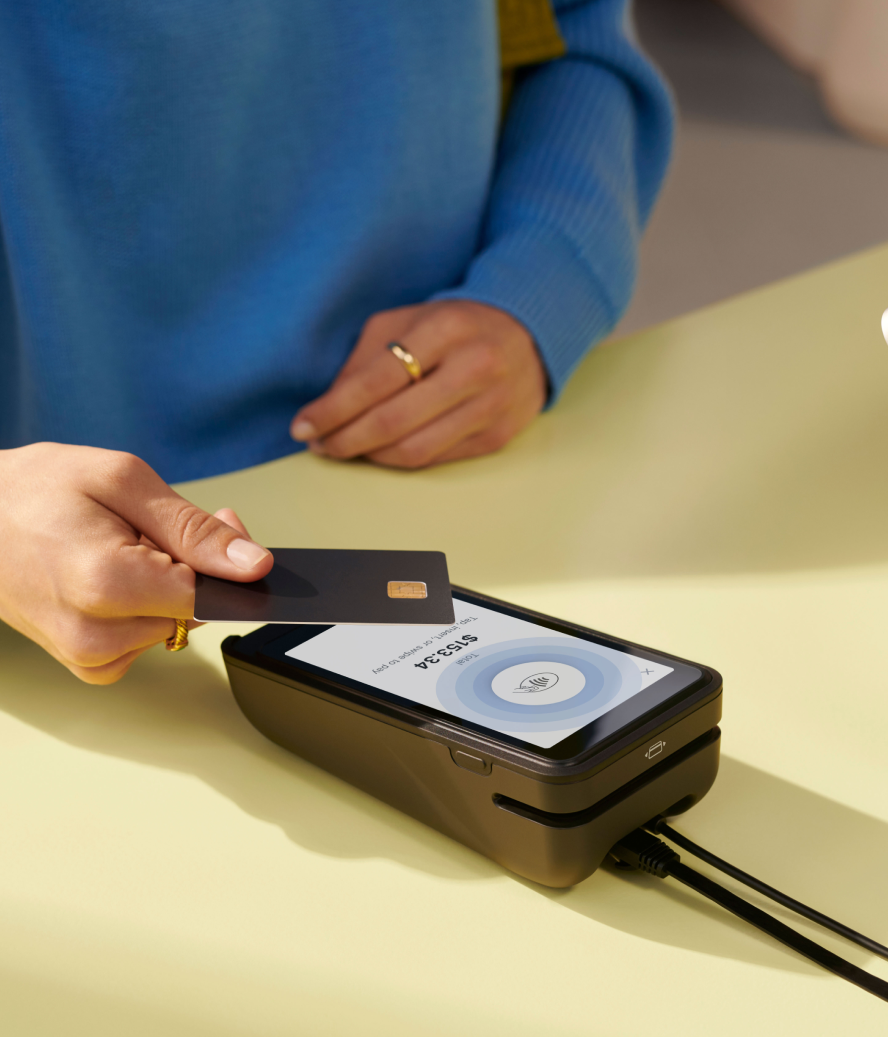

Store owners use Europay, Mastercard, and Visa (EMV) software to accept secure contactless payments. Shoppers tap or wave their chip credit cards or smartphones near a terminal to make a purchase.
A secure EMV system protects these transactions from fraud. It’s the global standard for in-person credit card payments. According to Market Research Future, the global EMV smart cards market was valued at nearly $9 billion in 2025 and is projected to reach over $22 billion by 2035.
This guide covers what EMV is, how it works, and how to choose an EMV solution for your business.
What is EMV software?
EMV software processes transactions made with chip-enabled smartcards. EMV chips generate and verify secure payment data between the card, payment terminal, and card issuer.
At checkout, the chip communicates with the point-of-sale (POS) terminal hardware to validate the card and authorize the transaction.
Banks, merchants, third-party payment processors, and vendors support EMV. EMVCo, a consortium of six member organizations, regulates the technology. Members include Mastercard, Visa, Discover, American Express, JCB, and UnionPay.
How EMV software works
EMV supports two types of chip technology:
- Contact. Customers don’t swipe these cards. They insert, or “dip,” the card into a card reader. The reader sends chip data to the terminal.
- Contactless. A card uses near-field communication (NFC) to transmit payment information when a customer taps or holds it near the reader. Mobile wallets and wearable devices work similarly.
When a customer dips or taps a card, EMV software produces a unique code, or cryptogram, for that transaction. The POS terminal receives this code and checks the card with the issuing bank.
When the bank authenticates the card, the system completes the sale. Some software asks for a PIN for high-value purchases or in regions that use chip and PIN. These contact and contactless interactions are the foundation for the main types of EMV software.
Types of EMV software
There are three main types of EMV software: SDKs, hosted solutions, and SaaS platforms.
- Software development kits (SDKs). SDKs give developers control of EMV payment experience. They let businesses embed payment acceptance into their own apps or workflows.
- Hosted solutions. Hosted solutions are turnkey. They rely on a provider’s infrastructure rather than a custom payment stack, which reduces the infrastructure businesses need to build and maintain.
- Software-as-a-service (SaaS). SaaS EMV solutions run in the cloud and can power or integrate with cloud-based POS platforms. Providers manage software updates and platform infrastructure, which reduces setup and maintenance work for store owners.
Choosing an option depends on how much control businesses want, their technical expertise, and whether they want to build a custom flow or use a provider-managed system.
Compare the three types in the table below:
| Type | Control | Expertise required | Setup complexity | Upfront cost | Maintenance | Best for |
|---|---|---|---|---|---|---|
| SDKs | High. SDKs let developers build tailored checkout flows. | High. SDK options are built for common environments like iOS, Android, React Native, and web. | High. Deployment can include a business application, back-end, reader, app integration, authorization, and production testing. | Medium to high. Businesses need development time and compatible payment hardware. | Businesses maintain their app experience and logic. Providers maintain payment infrastructure and hardware. | Businesses building custom apps or mobile checkouts. |
| Hosted solutions | Low to medium. No-code and standard terminal options reduce the need for customization. | Low. Providers offer no-code options that are designed to be easy to set up and use. | Low to medium. Simpler than SDKs because the business can use a compatible reader, terminal, or third-party POS. | Low to medium. Costs include payment hardware and processing fees. | Providers manage infrastructure. Businesses manage their accounts and staff training. | Businesses looking to launch EMV acceptance quickly. |
| SaaS | Medium. SaaS users can configure a provider’s application. | Low. SaaS POS systems like Shopify are for business users and run on supported iOS or Android devices and compatible hardware. | Low. Businesses typically only need a smartphone or tablet and a compatible card reader. | Low to medium. Costs include software plan, transaction fees, add-ons, and hardware. | Providers manage cloud software. Businesses manage terminals and subscriptions. | Retailers wanting built-in EMV payment acceptance. |
EMV software examples
Store owners use several EMV software solutions to process card-present transactions. Here are some examples:
Shopify POS Terminal
The Shopify POS Terminal pairs with a tablet for in-store checkouts. The countertop device has a dedicated customer-facing display. It connects POS and ecommerce on one platform.
Shopify Tap & Chip Card Reader
The Shopify Tap & Chip Card Reader accepts chip and contactless payments, including mobile wallets.
Connect the reader wirelessly to a tablet or phone to sell anywhere. Ecommerce and POS transactions funnel through the same platform for a unified approach to retail.
Mastercard Contactless Reader SDK
The Mastercard Contactless Reader SDK is a software development kit that helps businesses build EMV-compliant contactless payment solutions. The SDK supports NFC-based transactions, so retailers accept tap-to-pay payments.
Visa Developer Environment Platform
Visa has its own suite of EMV-compliant solutions for secure chip-card processing. The platform includes APIs for transactions, payment tokenization, and fraud prevention.
Entrust nShield
Entrust nShield is a hardware security module (HSM) that manages cryptographic keys for transaction processing. Retailers use Entrust nShield to strengthen payment infrastructure with encryption and authentication.
How to choose the right EMV software for your business
- Consider your specific business needs
- Ensure the EMV technology integrates with your payment system
- Confirm that the EMV software is compatible with your ecommerce platform
- Ensure that the EMV software meets security needs
- Compare customer support features
- Research the product and provider reputation
Research and compare options to ensure they align with your business requirements and budget.
1. Consider your specific business needs
An EMV setup depends on how a store owner sells, transaction volume, and how they connect in-person payments with inventory and reporting.
EMV for different business types
Here’s a look at EMV software based on business type:
- Pop-up sellers and market vendors. These businesses can use a lightweight Shopify POS setup to accept payments at temporary locations. For example, they can download the Shopify POS app to an iOS or Android device and accept contactless and chip cards at markets and events.
- Established brick-and-mortar retailers. These store owners can use permanent counter setups for their daily workflows. A countertop kit can include card readers, cash drawers, and receipt printers. The Shopify POS Terminal kit also gives customers a display for tips and receipts.
- High-volume brands. These companies can use Shopify POS Pro to manage an unlimited number of registers and users. The software includes advanced inventory management and staff permissions.
- Omnichannel businesses. These businesses can use EMV payments with online sales and orders. Shopify POS is part of the commerce platform. Store owners manage customers, inventory, and payments across in-store and marketplace channels.
2. Ensure the EMV technology integrates with your payment system
To find the right fit, evaluate whether the tool supports these payment options:
- Contact and contactless (NFC) payments
- International payments
- Digital wallet integration (Apple Pay/Google Pay)
Also, check which operating systems and devices the software supports, and confirm that it integrates with the accounting tools you use if you want data to sync automatically.
Shopify POS supports EMV chip cards with the Tap & Chip Reader. When a customer swipes, taps, or waves a chip card, Shopify authenticates transaction data and processes the payment.
3. Confirm that the EMV software is compatible with your ecommerce platform
Your POS and EMV setup should integrate with your ecommerce platform so in-person sales and online orders stay in sync. Without this compatibility, you may experience inventory level fragmentation and manual reconciliation errors.
When evaluating a provider, check whether they offer native EMV and direct integration with your ecommerce platform, or rely on a third-party gateway to bridge your physical and digital storefronts.
4. Ensure that the EMV software meets security needs
EMV software should offer data encryption, prevent fraudulent transactions, and receive regular security updates. It’s built with layers of protection, such as tokenization and point-to-point encryption (P2PE), to reduce risk in the event of a breach.
Use EMV-certified software that the Payment Card Industry (PCI) Security Standards Council has tested and approved.
5. Compare customer support features
Choose a provider that has 24/7 support via chat, email, and phone. Support teams don’t directly prevent breaches, but they respond to and mitigate the impact of technical glitches, suspected fraud, or data discrepancies.
Documentation, knowledge bases, and tutorials can also provide troubleshooting resources. Shopify, for example, has an active user community where store owners can get help with technical issues.
6. Research the product and provider reputation
Read user reviews of compatible EMV-certified software on independent platforms such as G2, Capterra, or Trustpilot. When browsing, look for mentions of uptime reliability and ease of pairing with hardware.
Check the provider’s track record for support and contact them with questions about their services.
Benefits of EMV software
EMVCo data shows 96.2% of global card-present transactions used chips in late 2024. In the US, this figure was 93.51% for all of 2024. EMV-compatible payment software has three main benefits:
1. Counterfeit card fraud protection
EMV chips replace static magnetic stripe data with dynamic authentication.
When a customer inserts or taps a card, the chip generates a unique cryptogram. This code prevents fraudsters from using stolen data to clone cards.
In countries and regions that implemented EMV chip cards, counterfeit card fraud at in-person terminals has decreased—for example, declines of around 70% to 90% in the UK and substantial reductions in Canada and the US.
2. Customer confidence
Nilson Report data from 2026 shows that worldwide card fraud losses were $33.41 billion in 2024, down 1.25 from 2023. In an NMI 2025 survey, 71% of American shoppers surveyed said they wanted better fraud protection. Another 64% cited data breaches as their top concern. EMV provides a visible security process: Customers insert or tap their card and wait for the terminal to process and approve the transaction.
3. PCI DSS compliance
The Payment Card Industry Data Security Standard (PCI DSS) is a set of policies and procedures designed to ensure the security of credit and debit transactions and protect customers’ personal information. It established security requirements that organizations must adhere to when processing card payments.
EMV technology helps protect card-present transactions by using dynamic data and encryption at the point of sale, which can reduce the exposure of cardholder data and support broader PCI DSS security efforts.
EMV software FAQ
Is EMV software free?
EMV software isn’t free. Payment processors or point-of-sale (POS) providers include EMV compliance in their service, or store owners buy or subscribe to EMV-compatible solutions. Costs vary by provider, software type, and features like fraud detection or encryption.
Is EMV software legal?
EMV software is legal when businesses use it in payment systems that follow network rules. EMVCo develops technical specifications, and payment networks set policies for merchants, issuers, and acquirers. Businesses that store, process, or transmit cardholder data still need to follow PCI DSS, with PCI DSS v4.0.1 now the active standard.
Is EMV mandatory in the US?
EMV technology isn’t legally mandatory in the US. However, store owners who don’t adopt EMV-compliant payment systems face financial liability for fraudulent transactions.
What’s the difference between EMV software and EMV hardware?
EMV hardware is a physical device, such as a chip reader or card terminal, that enables cards and mobile wallets to communicate with a payment system. EMV software is the logic inside the payment application that performs the transaction.
Does EMV software prevent all types of fraud?
EMV is designed to reduce counterfeit card fraud in card-present transactions because chip payments generate dynamic transaction data, but its impact on counterfeit fraud has varied across networks. This 2026 Kansas City Fed report found card-not-present fraud rates rose for single-message and dual-message debit networks between 2021 and 2023.

